
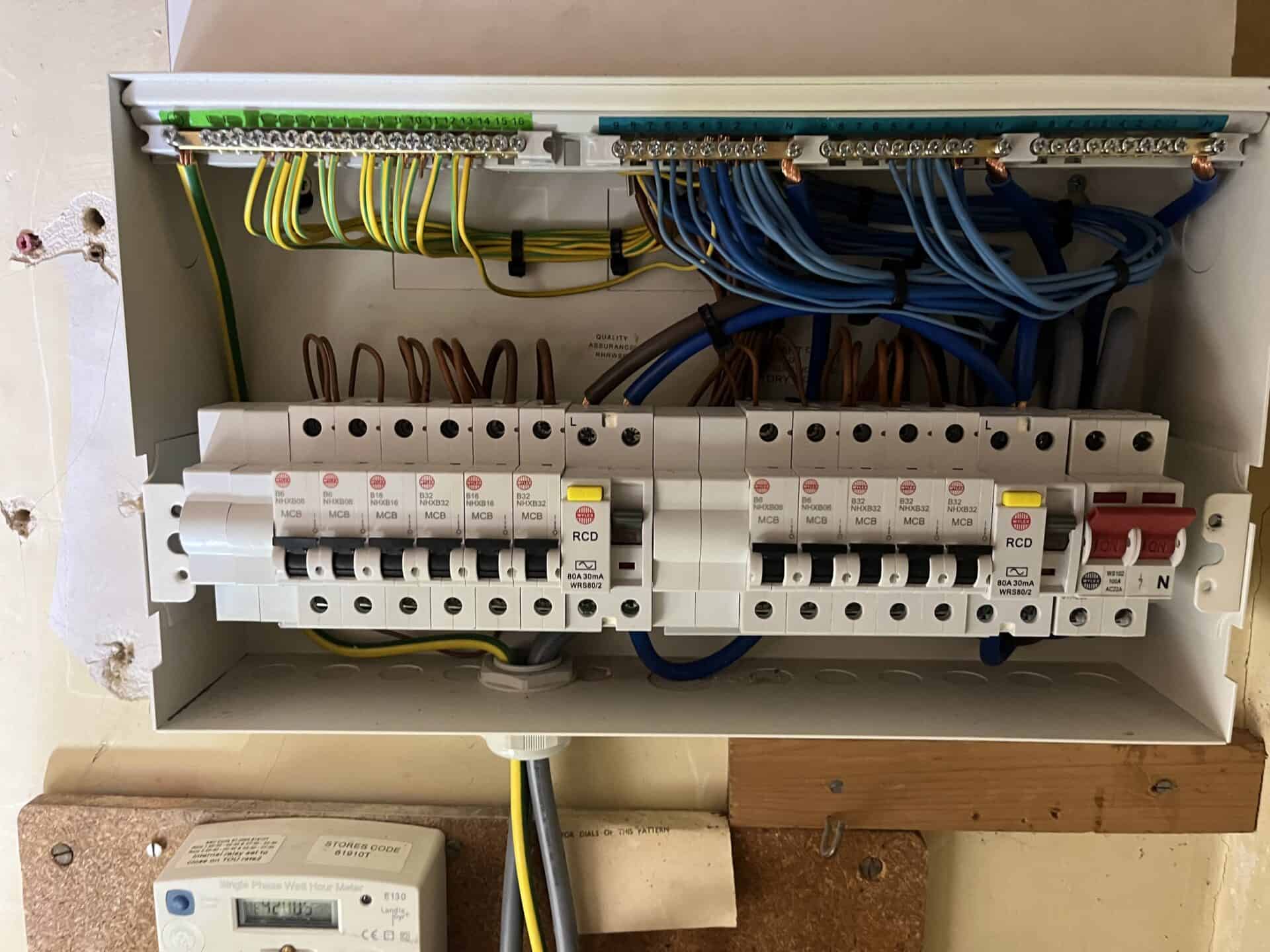
EICR codes explained clearly can help homeowners, landlords and property managers understand the seriousness of electrical problems found during an inspection. These codes show the seriousness of any electrical problems found during the inspection and whether urgent action or further investigation is required. This EICR codes explained guide covers the four main observation codes and the action each one may require.
For Brighton homeowners, landlords and property managers, understanding these codes makes it easier to decide what needs fixing and whether the EICR is satisfactory. This guide explains what each code means and what usually happens next.
What do EICR Observation Codes Mean?
EICR observation codes are used by the inspector to show the seriousness of each issue found. The code determines whether immediate action, urgent remedial work, further investigation or an improvement is recommended.
What Does C1 Mean on an EICR?
A C1 code means that danger is present and there is an immediate risk of injury. Immediate action is required to remove or isolate the danger. Examples may include exposed live parts or damaged electrical equipment that presents a direct electric-shock risk.
Where possible, the electrician may make the installation safe during the inspection, such as isolating the affected circuit. The EICR will still record the C1 observation and explain what further work is needed. An EICR containing a C1 code will be assessed as unsatisfactory.
What Does C2 Mean on an EICR?
A C2 code means that an electrical issue is potentially dangerous and urgent remedial action is required. The problem may not present an immediate danger during the inspection, but it could create a risk of electric shock, fire or injury if it is left unresolved.
Examples can include inadequate protection against electric shock, damaged electrical accessories or faults that could make exposed metalwork dangerous under certain conditions. The correct classification depends on the installation and the electrician’s professional judgement. An EICR containing a C2 observation will be assessed as unsatisfactory until the necessary remedial work has been completed.
What Does C3 Mean on an EICR?
A C3 code means that an improvement is recommended. The issue is not considered immediately or potentially dangerous, but making the suggested improvement would increase the safety of the electrical installation.
A C3 observation may relate to an older installation that does not include some of the protective measures expected in newer work. The electrician must assess the individual circumstances and use professional judgement when assigning the code. A C3 observation on its own does not make an EICR unsatisfactory, although the recommendation should still be considered.
What Does FI Mean on an EICR?
FI means that further investigation is required without delay. It is used when the inspector has identified a possible electrical safety concern but cannot reach a reliable conclusion within the scope or limitations of the inspection.
Under the current BS 7671:2018+A4:2026 model report, C1 or C2 observations make an EICR unsatisfactory. FI is recorded separately and means the issue should be investigated promptly so the correct classification can be determined.
Which EICR Codes Make a Report Unsatisfactory?
An EICR will be assessed as unsatisfactory if it contains a C1 or C2 observation. These codes indicate that danger is present or that an issue is potentially dangerous and needs remedial action.
A C3 code by itself does not make the report unsatisfactory because it is a recommendation for improvement. An FI observation means further investigation is needed and should not be ignored, as additional testing may reveal a dangerous or potentially dangerous fault.
Can You Pass an EICR with a C3 Code?
Yes. An EICR can still be assessed as satisfactory when it contains one or more C3 observations. A C3 means that an improvement is recommended, rather than that immediate or urgent remedial work is required.
Although people often describe an EICR as a pass or fail, the formal result is satisfactory or unsatisfactory. C3 recommendations do not need to be completed for the report to be satisfactory, but carrying them out may improve the safety of the installation.
What Happens After an Unsatisfactory EICR?
After an unsatisfactory EICR, the observations should be reviewed and the necessary remedial work arranged. C1 issues require immediate action, while C2 issues require urgent attention. Any FI observations should also be investigated promptly so the electrician can determine the nature and seriousness of the problem.
Once the work has been completed, the electrician should provide suitable certification or written confirmation detailing the repairs. A completely new EICR may not always be necessary, depending on the circumstances and the work completed.
Does an Unsatisfactory EICR Mean the Property Needs Rewiring?
No. An unsatisfactory EICR does not automatically mean that the property requires a complete rewire. Many reports identify individual faults that can be corrected through targeted remedial work, such as replacing damaged accessories, improving protective measures or repairing a faulty circuit.
A full rewire may only be recommended where the existing installation is in poor condition, has widespread defects or cannot be made safe through sensible individual repairs. The electrician should explain the available options clearly before any work begins.
How Quickly Should EICR Remedial Work Be Completed?
The timescale depends on the seriousness of the observation. C1 issues require immediate action and C2 issues require urgent remedial work. Homeowners should arrange repairs promptly based on the electrician’s advice.
For privately rented properties in England, landlords must normally complete required remedial or investigative work within 28 days of the inspection, or sooner when the report specifies a shorter timescale.
EICR Testing and Remedial Work in Brighton
BKA Electrical provides EICR testing for homeowners, landlords and property managers across Brighton and Hove. We explain any observation codes clearly, identify the work required and provide straightforward quotations for remedial repairs where necessary. With EICR codes explained clearly, you can understand which faults require urgent work and which are recommendations for improvement.
Whether the report identifies an urgent fault or simply recommends an improvement, our aim is to help you understand the condition of the installation and make an informed decision about the next step.
Book an EICR in Brighton
Need an EICR in Brighton or help understanding observation codes on an existing report? Contact BKA Electrical for clear advice, professional testing and quotations for any remedial work required. We work throughout Brighton, Hove and the surrounding areas.