
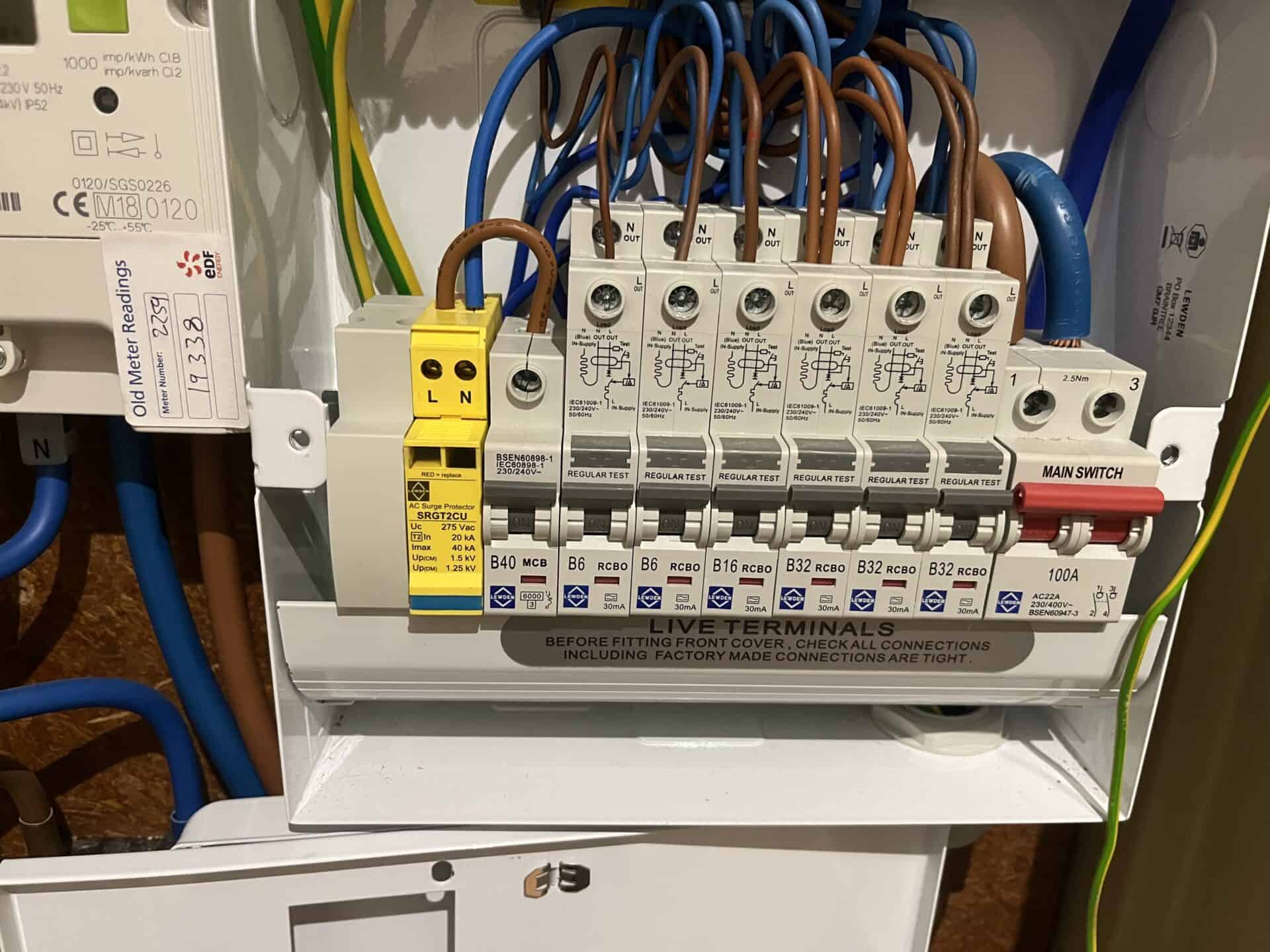
If you own or manage a House in Multiple Occupation (HMO) in Brighton & Hove, electrical safety is part of both day-to-day landlord management and, where the property is licensed, the local licensing requirements. For landlords arranging an HMO EICR in Brighton & Hove, a valid Electrical Installation Condition Report is the main document used to record the condition of the fixed electrical installation. BKA Electrical provides landlord EICRs across Brighton & Hove.
This guide explains the current EICR requirements for Brighton & Hove HMOs, how often testing is needed, what happens if the report is unsatisfactory, and how the local HMO licensing rules fit alongside the national electrical-safety regulations.

What Counts as an HMO in Brighton & Hove?
In simple terms, a House in Multiple Occupation is a property occupied by people from more than one household who share facilities such as a kitchen or bathroom. Brighton & Hove City Council describes an HMO as a house containing three or more unrelated occupants who share basic amenities.
Licensing depends on the type and size of the property. Mandatory HMO licensing applies to HMOs with five or more unrelated occupiers. Brighton & Hove also operates a city-wide Additional HMO Licensing Scheme for HMOs of two or more storeys with three or four unrelated occupiers. Some single-storey properties with three or four unrelated occupiers can instead fall under selective licensing depending on their location, so landlords should check the council’s current scheme for the specific property.
You can check the current local rules on the Brighton & Hove City Council HMO licensing pages.
Does an HMO Need an EICR?
Yes. Landlords in England must ensure that the fixed electrical installation in a rented property is inspected and tested by a qualified person at least every five years, or sooner if the previous report sets an earlier date. The landlord must obtain the report and provide copies to tenants and the local authority where required.
For licensed HMOs in Brighton & Hove, the council’s licence conditions add a clear local requirement: the fixed electrical wiring and installations must be certified as safe at least every five years, must be in a satisfactory condition, and the licence holder must provide a valid EICR based on the current BS 7671 within three months of the licence being issued.
That means HMO landlords need to think about both the national rented-sector electrical safety rules and the conditions attached to the local HMO licence.
Who Can Carry Out an HMO EICR in Brighton & Hove?
The inspection and testing must be completed by a suitably qualified person. Brighton & Hove City Council’s HMO licensing conditions specifically recognise electricians registered with bodies including NAPIT, NICEIC and the ECA, while also allowing other electricians where suitable competence can be demonstrated.
BKA Electrical is NAPIT registered, so we can carry out landlord and HMO EICRs, issue the inspection report and explain any observations or remedial work clearly.
How Often Does a Brighton HMO Need an EICR?
The normal maximum interval is five years. However, the next-inspection date stated on the existing EICR takes priority if it requires testing sooner.
A new EICR is not automatically required every time the tenancy changes if a valid report is still in date and does not require outstanding investigative or remedial work. The most recent valid report should be supplied to a new tenant before they occupy the property.
If you are preparing for an inspection, our Brighton landlord EICR checklist explains how to arrange access and what information is useful to have available.
What Does an HMO EICR Check?
An EICR assesses the condition of the property’s fixed electrical installation. Depending on the installation, access and the agreed scope, inspection and testing can include:
- the consumer unit and protective devices
- earthing and bonding arrangements
- fixed wiring and circuit condition
- sockets, switches and fixed electrical accessories
- lighting circuits and fixed light fittings
- RCD and RCBO protection where fitted
- signs of overheating, damage, deterioration or unsuitable alterations
- circuits serving relevant shared or communal parts of the HMO where they form part of the installation being inspected
An EICR is not simply a visual check. Electrical tests are carried out to assess the installation and identify defects that may not be obvious from looking at the accessories alone.
Does an EICR Cover Fire Alarms and Emergency Lighting?
Not as a substitute for their own inspection, testing and maintenance requirements. An EICR deals with the fixed electrical installation. HMOs can also have separate fire-safety duties covering smoke and fire-alarm systems and, where installed, emergency lighting.
Brighton & Hove’s HMO licensing standards state that most HMOs will require an appropriate fire detection and alarm system. Where a Grade A fire-alarm system and emergency lighting are installed, the licence holder must be able to demonstrate appropriate maintenance and testing. These requirements should be managed separately from the periodic EICR.
What Happens If the HMO EICR Is Unsatisfactory?
An EICR can contain different classification codes. The most important for landlords are:
- C1 – Danger present: immediate action is required.
- C2 – Potentially dangerous: remedial work is required.
- FI – Further investigation: further investigation is required without delay.
- C3 – Improvement recommended: an improvement is recommended, but a C3 on its own does not make the report unsatisfactory.
Where C1, C2 or FI observations require remedial or investigative work, current government guidance requires that work to be completed within 28 days, or sooner if the report specifies a shorter period.
After the work is completed, the landlord should obtain the appropriate written confirmation and provide the required documentation to the tenant and local authority within the applicable timescale. A completely new EICR is not automatically necessary after every remedial job; the correct follow-up paperwork depends on the work completed.
For a fuller explanation, see our guide to what happens after an unsatisfactory landlord EICR and our guide to C1, C2, C3 and FI codes.
What Paperwork Should an HMO Landlord Keep?
Good record keeping makes both tenancy management and future inspections easier. HMO landlords should retain the current EICR, previous reports where relevant, and certificates or written confirmation for any remedial electrical work completed after an inspection.
Current government guidance says the EICR should be supplied to an existing tenant within 28 days of the inspection, to a new tenant before occupation, and to the local council within seven days if the council formally requests it. The report should also be retained for the next inspector.
What About Electrical Appliances Supplied by the Landlord?
The EICR focuses on the fixed electrical installation, so it should not be treated as a portable-appliance inspection. Brighton & Hove’s HMO licensing conditions also require the licence holder to ensure electrical appliances provided as part of the tenancy are safe and to supply information on appliance safety if the council requests it.
For landlords, the practical point is to keep the fixed-installation EICR and any appliance-safety records clearly separated so that each requirement can be demonstrated when needed.
HMO EICRs for Letting Agents and Portfolio Landlords
HMOs often need more coordination than a straightforward owner-occupied property. There may be several tenants, shared spaces, locked rooms, different access arrangements and a larger number of circuits or electrical points to inspect.
For landlords and letting agents managing multiple properties, it helps to keep a clear record of each property’s EICR date, next-inspection date, any outstanding remedial work and the certification issued after that work. Grouping appointments can also make access and reporting easier where several properties are due around the same time.
Real Brighton Landlord EICR Examples
BKA Electrical carries out landlord EICRs across Brighton & Hove. Our Wick Hall landlord EICR case study shows a real inspection followed by remedial work including bathroom lighting, bonding, an extractor fan, kitchen lighting and hob work. Our Roedale Road landlord EICR case study gives another example of testing, findings, remedial work and certification.
These are landlord EICR examples and are not presented as HMO case studies. They are included to show the type of inspection, reporting and follow-up electrical work BKA Electrical carries out for rental properties in Brighton.
Brighton & Hove HMO EICR Checklist
- Check whether the property requires a mandatory, additional or other local licence.
- Check the date and next-inspection date on the current EICR.
- Make sure the electrician can access the consumer unit, rooms and relevant fixed electrical points.
- Provide previous EICRs and certificates where available.
- Tell the electrician about known faults or repeatedly tripping circuits.
- If the report is unsatisfactory, arrange required C1, C2 or FI work within the stated timescale.
- Keep the report and follow-up certification with the property’s compliance records.
- Remember that fire-alarm, emergency-lighting and appliance-safety obligations may need separate records and testing.
Book an HMO or Landlord EICR in Brighton
BKA Electrical is NAPIT registered and carries out landlord EICRs in Brighton & Hove for rental properties, HMOs, landlords, letting agents and property managers. We provide the inspection report, explain the findings clearly and can quote separately for any remedial work identified.
If you need to arrange an HMO EICR or want to discuss a property before booking, contact BKA Electrical or call 07983 142029.
Official guidance used for this article
- Brighton & Hove City Council – HMO Licensing Standards and Conditions
- Brighton & Hove City Council – HMO licensing information
- GOV.UK – Electrical safety standards in the private and social rented sectors
This guide is general information about electrical safety and HMO requirements. Licensing and legal requirements can change and may depend on the property, tenancy and licence conditions, so landlords should check the current Brighton & Hove City Council and GOV.UK guidance for their circumstances.