
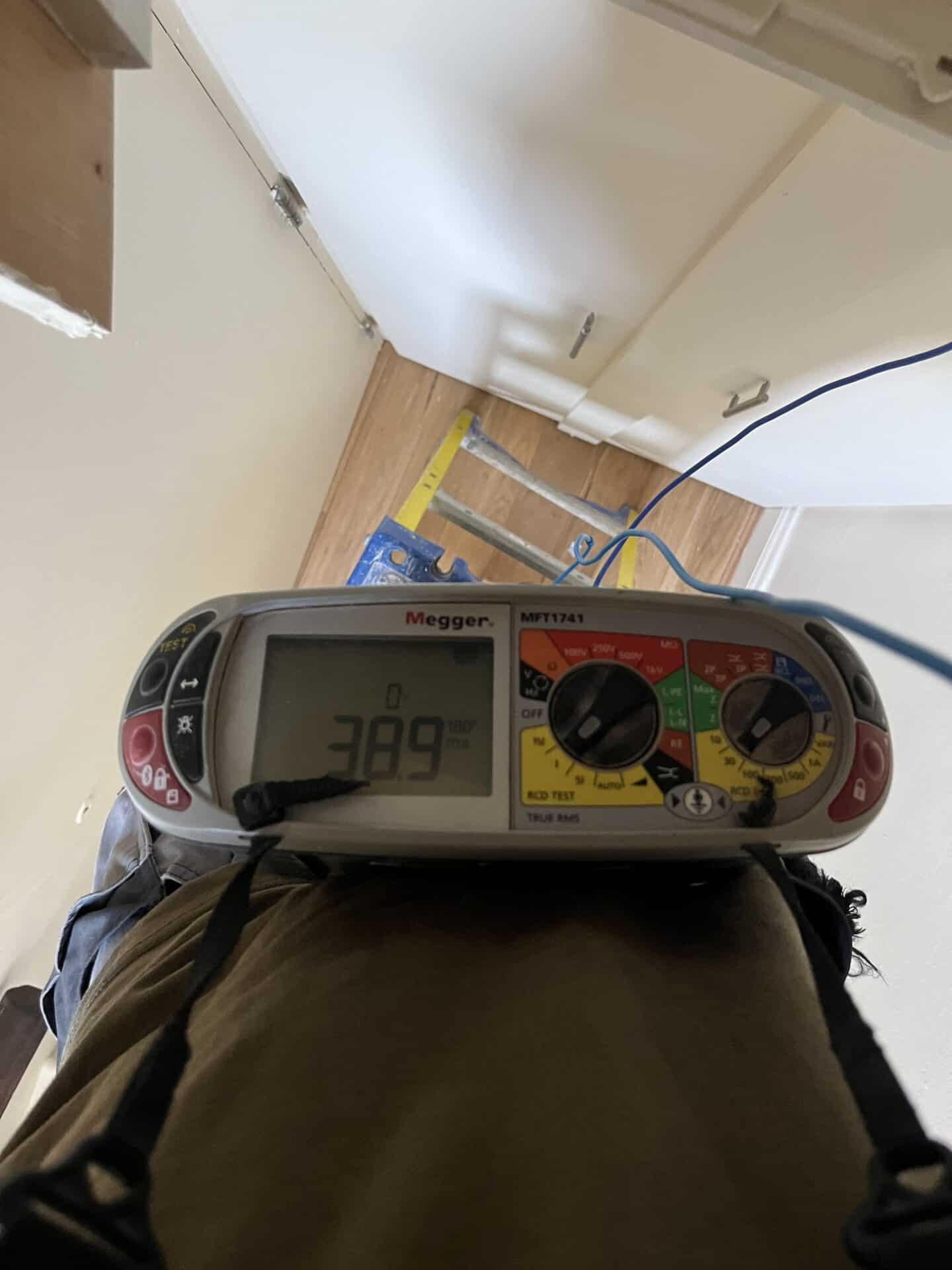
When a letting agency manages dozens of flats and houses, electrical safety certificates become an ongoing scheduling and record-keeping job. Different properties have different tenants, inspection dates and access arrangements. The challenge is keeping everything organised without last-minute appointments or uncertainty about outstanding remedial work.
This guide explains a practical way for Brighton and Hove letting agents and property managers to organise landlord Electrical Installation Condition Reports (EICRs) across a portfolio. It focuses on the management process rather than repeating our landlord EICR service in Brighton, which covers booking an inspection and the testing itself.
Start with a single EICR record for every property
Whether you manage five properties or fifty, each address should have an accessible record showing the date of its last inspection, the next inspection deadline, the report outcome and any follow-up work. A shared spreadsheet or property-management system can work, provided there is a reliable process for keeping it up to date.
- Property details: full address, property type and the landlord or management contact.
- Current report: a digital copy of the latest EICR and the date it was completed.
- Next inspection: the earliest date required by the report or applicable rules; do not assume every property is automatically on the same schedule.
- Outcome: whether the report was satisfactory and, if not, what remedial work or investigation was required.
- Completion evidence: relevant records following remedial work, plus when and to whom documents were provided.
- Access notes: who can arrange entry and any practical restrictions the electrician needs to know.
One common source of confusion is treating an EICR as a simple certificate with only an expiry date. It is a report on the condition of a fixed electrical installation; the observations and any recommended earlier inspection date matter too.
Plan ahead instead of booking at the deadline
For rental properties in England, electrical installations must generally be inspected and tested by a qualified person at least every five years, or sooner where the report calls for an earlier inspection. Landlords must also comply with duties concerning provision of reports and remedial work. The legal responsibility rests with the landlord, even when an agent helps arrange the appointments.
A practical management approach is to review upcoming dates well in advance. Identify properties needing inspections, contact the owner and tenant about suitable access, and allow time for the electrician’s report and any work that follows. Do not assume that an EICR will automatically be satisfactory.
For the current rules and report-delivery responsibilities, see the official government guidance for electrical safety in rented homes in England. It is especially important to consult current guidance when managing different types of accommodation.
Arrange access without unnecessary repeat visits
An inspection normally requires access to the consumer unit and a representative range of circuits, fittings and equipment. Occupied properties can be more difficult when rooms, sockets or distribution equipment are inaccessible. Good preparation helps the electrician carry out an appropriate inspection without avoidable delays.
- Confirm who is authorised to arrange access and how the tenant should be contacted.
- Advise occupants that testing can involve temporary interruption of electricity.
- Check that the consumer unit is accessible and that any locked areas have been arranged.
- Let the electrician know about previous reports, recent electrical work and any known faults.
- Where several properties are being inspected, group appointments sensibly by area without compromising time needed for testing.
If you are managing an occupied property, our Brighton landlord EICR preparation checklist explains what to have ready before the visit.
Keep inspection reports and remedial work separate
An EICR records the inspector’s observations, including classifications that may require action. It does not itself mean that every installation needs a complete rewire or a new consumer unit. The appropriate response depends on the defects actually identified.
If a report is unsatisfactory, the property manager should make sure the landlord understands the findings, agrees what further investigation or remedial work is needed, and retains suitable completion records. The electrical inspector can explain the report; the agent can then keep the owner, tenant and contractor informed about the practical arrangements.
Our guide to an unsatisfactory EICR in Brighton covers the implications in more detail. Our EICR classification codes guide explains C1, C2, C3 and FI in plain English.
What about a new tenancy?
A new tenancy does not automatically mean a fresh EICR is needed if the existing report is still current and satisfies the relevant requirements. However, a change of tenant is an opportunity to review the records and consider whether the electrical installation’s condition has changed. The most recent report should be provided to the new tenant as required.
For a managed portfolio, this is why an organised document register is more useful than a folder of disconnected PDFs. It helps staff identify the right report quickly when tenancies change or owners request copies.
Brighton and Hove properties can involve different access arrangements
The practicalities of organising EICRs vary between an individual flat, a terraced house, a converted building and a house in multiple occupation (HMO). Access to a flat’s consumer unit may be straightforward, while larger or subdivided properties may require additional arrangements. The scope of an inspection must be agreed for the property and the electrical installation concerned.
For HMO-specific considerations, see our separate Brighton and Hove HMO EICR guide. We also have a genuine landlord EICR case study at Wick Hall, Brighton showing local inspection work.
A simple workflow for property managers
- Keep a central list of properties and their latest inspection reports.
- Flag approaching inspection dates and check if an earlier interval applies.
- Arrange suitable access with the relevant parties before the visit.
- File the completed report and communicate its findings to the landlord.
- Track necessary investigation or remedial work separately until the appropriate evidence is received.
- Update the portfolio record and deliver report copies in line with the applicable requirements.
That process makes it easier to hand responsibility between staff members and reduces the risk of losing track of an inspection after the contractor has left.
Need landlord EICRs across a Brighton property portfolio?
BKA Electrical is a NAPIT-registered electrical contractor based in Brighton and carrying out EICR inspection and testing across Brighton and Hove. We work with landlords and can discuss arranging inspections for multiple properties, as well as explaining report observations and quoting separately for any necessary further work.
If you manage rental properties, visit our landlord electrical safety certificate and EICR service or contact BKA Electrical with the addresses, property types and approximate inspection requirements. We can discuss a sensible plan without publishing a one-size-fits-all price.